Wednesday, August 19, 2009

Lopez Island’s Chadwick Head: An Antidote for Stress

I recently spent a perfect afternoon on the summit of Chadwick Head. I can’t think of a better place to unwind and let your worries float away. And there was nobody else here this lovely August day.


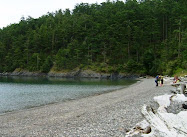
When I arrive on Lopez Island, I make a beeline to Watmough Bight on the southeastern edge of the island. After parking at the end of the gravel road, I walk through the tunnel of leafy green trees to the beach.


A father and son kayak past in the tranquil bay as I walk along the beach.


Just shy of the rock wall at the other end of the beach, I hop over a few driftwood logs and cut inland on a narrow trail through the tall shrubs. Soon I’m in the forest where Chadwick Head rises steeply to my right.


About 10 minutes into my hike I stop and gaze over the natural wetland behind the beach.


After angling up the hillside along the loose trail, the forest clears into a series of rolling brown meadows interspersed with madrona and pine trees. Surely I’ll see other people up here on this sunny afternoon. But it’s just me and the ravens and dragonflies.

Remember the opening scene in the Sound of Music where Julie Andrews flings her arms wide and breaks into song on an Alpine hilltop? That’s what I feel like doing up here.


I meander along the hilltop until I go as far as I can. Below the hill drops away into the forest and azure waters of Rosario Strait beyond. I settle on the ground at a comfy spot just below a rocky outcrop.

Then I just sit.


After a while I pull out the Tao te Ching and read some ancient words of Lau Tzu. This one strikes me today:

One who lives in accordance with nature
does not go against the way of things
He moves in harmony with the present moment
always knowing the truth of just what to do


I decide the truth of just what to do right now is to just breathe in the fresh clean air and exhale my pent up stress about work, money, family, life. Because this is my life at the present moment, and it’s pretty sweet.

I lean back against a rock and take in the view below. Across the strait lie several forest-covered islands—Burrows, Allen, Fidalgo, and northern Whidbey.


From the north a huge oil tanker comes cruising past not that far offshore, sinister-looking in its scale and contrast to the natural marine setting of the San Juan Islands.


Then I hear a loud slap and splash in the water a few hundred feet below and see a white circle of bubbles rise to the surface. Perhaps it’s a seal or sea lion trying to stir up some fish or just messin’ around.


Drowsy with all this pure island air and sunshine, I close my eyes and drift into a light sleep. I’m awakened by the drone of a small propeller plane, which dips its wings and heads straight in my direction, passing just a hundred feet directly above me. I think the pilot saw me.

A few hours pass and it’s time to head down to meet up with some friends. I see a makeshift swing someone has rigged onto the strong branch of a gnarled pine tree. It’s a little high, so I have to leap up onto the seat, which gets me really swinging. Now this is moving in harmony with the present moment. I highly recommend it.


When You Go
There are no signs to Watmough, but it’s not that big an island. Eventually you’ll find your way there. Click here for a map of the island showing Watmough and here for another more detailed map. Since this is a nature preserve and valuable ecosystem, be respectful of this special place and leave no trace when you leave.

Monday, August 3, 2009

Lummi Island Kayak Camping : Get some Solitude

You don't have to travel far from the city here in the Pacific Northwest to get away and revel in Nature's embrace. Head to most any Salish Sea island, and you'll find that crossing the water from the mainland quickly takes you worlds away.

On a warm August weekend, a friend and I kayak to Lummi Island, the most northeastern of the San Juan Islands, for an overnight camping trip. For being so close to Bellingham and a short ferry ride from the mainland, the south end of Lummi feels surprisingly remote.

Putting in and Taking Off
On Saturday morning with a light wind at our backs, we haul our sea kayaks down to the beach at Gooseberry Point just north of the Lummi ferry terminal. We’ll paddle about 6 miles south down Hale Passage to the rustic but lovely Lummi Island Department of Natural Resources site.

After we manage to stuff all our camping gear (and ourselves) into the kayaks, we shove off into the water. (Packing and loading a kayak efficiently for camping is an art that I’ve not entirely mastered.) Today we’re lucky to have fairly benign water, with minimal currents and not much chop. Conditions in Hale Passage can be tricky and dangerous for kayakers, so we time our trip to avoid the peak flood current. With strong tidal currents moving around Puget Sound’s many islands, always check the tide charts before any paddle—something novice paddlers often neglect to do.

Lummi lies directly across the mile-wide passage from Gooseberry Point, but with the strongest flood current in the middle of the channel, Norm suggests “Let’s angle across to catch as much current as possible.” As we reach the Lummi Island side of the passage, Norm points out the dramatic topographical difference between the relatively flat northern half of the island and the hilly southern half. “There’s a thrust fault extending midway through the island,” points out Norm, who happens to be a hydrogeologist. Southern Lummi is a long, forested ridge with rocky headlands that plunge steeply into the water—especially on the west side of the island. It’s also a 661-acre Natural Resource Conservation Area mantled with mixed-aged forest of mostly Douglas fir and madrona trees.

Arriving
“We’re here,” says Norm after a few hours kayaking along the mostly undeveloped, forested shoreline. We pull into a lovely little tree-lined cove, pull off our cockpit spray skirts, and climb out onto the rocky beach. With government budgets slashed, the Lummi DNR marine campground is maintained largely by volunteers from WAKE (Whatcom Area Kayak Enthusiasts) club. Thanks WAKE!

I start pulling dry sacks out of my kayak and piling them on the beach, then need several trips to ferry gear up the steep steps to the campsites nestled in the forest above. “Does this spot work for you?” says Norm as he nabs a campsite with a picnic table and a peak-a-boo view down to the cove through the trees.

Exploring
When our tent is up and gear stashed inside, we paddle another mile to the south end of the island and up the west side to explore. At this end of Lummi, there are no decent landing spots along the steep, rocky cliffs.

As we approach the very southern tip of Lummi, several forest-covered islands to the south come into view—Samish, Guemes, Cypress, Vendovi, and Sinclair. Even though it’s close to slack tide, there’s still a strong, choppy eddyline to cross as we round the end of the island. Adrenaline courses through me as I power paddle through the squirrely water and the lowering sun hits me full in the face. Be careful if you venture here—an experienced solo kayaker died a few years ago here after he capsized in the strong currents.

For the next hour we mosey up the western shoreline past wild, untamed, and precipitous rock headlands. A few miles west across Rosario Strait looms the blue silhouette of Mount Constitution on Orcas Island. Visible in the distance beyond Orcas are the mountains of Vancouver Island. On the southern horizon are the Olympic Mountains, backlit by the lowering sun.

Only one power boat and three other kayakers are out here on this warm summer weekend evening. We pass them and soon they’re gone. I’m always amazed at the solitude you can find at beautiful spots in this populous region.

“Keep your eye to the south end of the island,” says Norm as we turn around and head back south. “The Alaska Marine Highway ferry should be passing by pretty soon.”
In a few minutes the big white ship comes barreling around the south end of the island a quarter-mile or so away. Soon it recedes to the north. We both decide that rolling our kayaks on that boat and heading to Alaska is a dream trip.

Returning
Another warm morning greets us after a fitful night sleep—I rarely sleep well camping, although I love to camp. Go figure. We pack up the kayaks and head back north, but today we’re battling the tide and wind. Still, it could be much worse. Three hours and sore muscles later, we’re back at Gooseberry Point, tired but happy.

When You Go
Be sure to check the marine forecast and current and tide tables if you plan a paddle to Lummi. And go early on a weekend to snag a good camping spot. Bring your own water since it’s a rustic, dry campsite. And leave no trace when you leave!

Thursday, July 30, 2009

Gone to the Berries


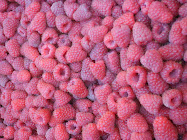
Okay, too hot here in Ecotopia for me! July has been about work, but I did manage my annual trip out to Carnation in the Snoqualmie Valley to u-pick raspberries and blueberries, now tucked into zip-lock bags in the freezer.

Raspberries are done for the season, but you can still pick blueberries each weekend well into August at Henna Blueberry Farms on the Fall City-Carnation Road. Tip: For the best frozen berries, take the time to rinse and then freeze them individually on a wax paper-lined cookie sheet before putting your berries in the freezer bags. And here's my "recipe" for one of my favorite ways to use the bounty. Be creative and improvise your own favorite:

Northwest Berry Smoothie

Throw the following into a blender:

1/3 frozen banana
handful mixed frozen local raspberries
blueberries
strawberries
or maybe blackberries!

1/3 cup lowfat plain yogurt (I like Nancy's)
1/2 cup organic apple juice
1T ground flax seeds

Blend until smooth and creamy. Enjoy!

(I personally like my smoothies thick enough to need a spoon.)

Check back in the next couple days for my next post about sea kayaking to Lummi Island. In the meantime, keep cool!

Thursday, July 9, 2009

Vashon Island: Lavender Fields Forever


Today’s post is a detour from my trip along the Cascade Loop; I’m off to Vashon Island just south of Seattle in Puget Sound. Any trip to Vashon feels like a trip back to the more bucolic, less populated Northwest I remember as a kid growing up east of Portland. So I relish my annual trips over to “the Rock” to help the Lavender Sisters harvest their organically grown lavender.

Northwest + Lavender = Festivals
Although many people think rain when they think of the Pacific Northwest, west of the Cascade Mountains we’re technically in a classic Mediterranean climate with mild, temperate winters and generally warm and dry summers. Perfect conditions for growing lavender, which has become increasingly popular in our region. Lavender festivals draw thousands of visitors each summer to the Olympic Peninsula, the San Juan Islands, and Vashon, which celebrates its seventh annual Lavender Farm Tour July 11 and 12 this year.

Heading Over
Julie, Felicity, and I head over for the Lavender Sisters’ first harvest of the season just a week ahead of the farm tour. Summer blesses us with a perfect day—clear blue skies and 75 degrees. We hop on the Fauntleroy-Vashon ferry for the quick 15-minute ride across the Sound.

We couldn’t have asked for a more lovely setting to harvest. Crescent Falls Organic Farm lies on a slope above Colvos Passage, a blue ribbon of sea that separates Vashon from the Kitsap Peninsula to the west. As we coast down the long driveway to the farm, we pass rows of lavender that resemble giant fuzzy purple caterpillars lying side by side.

Coming Together
This is my fifth season harvesting for the Sisters, and I always enjoy coming back for more. As we pile out of the car and gather outside the beautiful craftsman-style “farmhouse,” it’s an annual reunion as I exchange hugs with the Lavender Sisters—Katy Jo, Merrilee, and Dana. “Welcome!” cries Katy Jo as she embraces us, “So nice to see you again!”

About 15 or 20 of us, young and old, ranging in age from about 7 to 87, walk to the upper field to harvest today. “Okay, everybody into a circle,” says Katy Jo as we grasp hands, “and introduce yourself.” And we begin, as the Lavender Sisters call it, our community in the field.

Cut, Strip, Bundle, and Run
Although I came with a couple girlfriends, I team up with gorgeous fortysomething sisters Renee and Sheila, tall and robust farm assistant Camille, and Lavender Sister Dana. We form an assembly line between lush rows of royal velvet lavender. I’m a buncher today and take my position next to the stripper. (No, it’s not naked in the fields.) Our stripper grabs a hunk of freshly cut lavender from our cutter, shakes loose the “scunge” or “shamba” (that’s Dana-speak for withered or too-short stalks), runs her hands quickly down the stems to loosen and strip stray leaves, then hands it off to me. I check for uniform bundle size, loop a rubber band around the bottom of the bundle, and place it atop a freshly shorn lavender shrub, ready for the runner to come take it away.

"Don’t worry about the bees, they’re too drunk on lavender to bother you,” shouts Dana across the field. After the first few bundles, the pace picks up and our assembly line scrambles to keep up.
Soon we find our groove and conversation springs up naturally. We learn what each other does for a living. We figure out our six degrees of separation, although usually it’s just one or two degrees. In our little group today we discover that four out of five of us grew up in Portland. Three of us even went to the same high school. Our community is taking shape.

Good Food and Friends
This afternoon’s harvest went quickly, and soon we’re heading down to the house for our reward—a fabulous dinner of a mostly island-grown green salad, fresh salmon caught by Katy Jo’s husband Steve, hunks of whole grain artisan bread, and a rich, flavorful potato-fennel gratin. And of course good wine. Everybody is happy. Like the bumble bees, we’re all drunk on the heady, complex scent of lavender, fresh air, and plenty of sunshine. Unlike the bees, we’ve also got fun conversations with interesting new friends. IMO, life doesn’t get much better. Oh yea, there’s also that gorgeous sunset over the Olympic Mountains as our backdrop on the ferry ride home. Like I said….

When You Go
Click here for information on the 2009 Vashon Lavender Farm Tour. Don’t bother driving on the ferries and fighting traffic and long weekend lines. This year there will be a free shuttle running between farms. If you’d like to join a harvest with the Lavender Sisters, email them at mbrunyan@earthlink.net. In the Seattle area you can buy their lovely lavender at Metropolitan Markets through most of July.

Friday, July 3, 2009

Along the Cascade Loop: Methow Magic

Day 1 PM

Driving down from the stunning twin rock spires of Liberty Bell at Washington Pass towards the Methow Valley, the first thing you notice is the change in the forest along the highway. Instead of mostly Douglas fir trees and the dense, mossy understory west of the Cascade Crest, ponderosa pines (“P-pines”) now dominate, with their rough cinnamon-colored bark and sparse forest floor. Suddenly you’re in a more arid climate. When I spend more than a day or two east of the crest, my naturally wavy hair straightens noticeably (which is fine by me).


Today, though, the rain follows me all the way down into the upper valley. After my soggy hike to Lake Ann at Rainy Pass, I turn off the highway and stop at the Mazama Store for a hot cocoa. This local institution is a cafĂ©/coffee shop/bakery/general store/sportswear shop/gas station/community gathering place rolled into one cozy and appealing spot. When I order my cocoa, the young barista rattles off several kinds of chocolate to choose from. “What's your favorite?” I ask. “I like the Mexican chocolate, with a dash of cinnamon,” she tells me. I grab a slice of their melt-in-your-mouth chocolate chip-banana bread to go with my Mexican hot cocoa.

But the real reason for this trip to the Methow is to spend two nights at Sun Mountain Lodge (courtesy of a Methow Conservancy fundraiser). This wonderful resort sits perched over 1,000 feet above the kitschy Old West-themed town of Winthrop about 15 miles down valley from Mazama.

I was introduced to the Methow Valley by my good friend Mary Ann (thanks Mab!), whose family formerly owned the Lazy M Ranch property on which the resort lies. Her uncle Jack Barron developed the original Sun Mountain lodge back in the 1960s; since then the resort has been sold and redeveloped into a somewhat more deluxe place. Regardless, I fell in love with the valley on my first trip there and have since made many trips for doses of what I like to call Methow Magic. There’s just something about the clean dry air, the narrow mountain valley with lovely long vistas, soaring raptors overhead, the quiet.

Heading up to the lodge, I pass irrigated meadows with grazing horses, red corrugated-roofed vacation homes, and the long blue stretch of Patterson Lake reservoir. Winding higher up the dry shrubby rise, I don’t glimpse the lodge until suddenly it’s looming in front of me at the top of the hill, like an oasis in this semi-arid landscape.

In a separate building from the main lodge, my cozy room has a rustic wood-beamed ceiling, knotty pine furniture, and balcony with a mountain view (partially obscured by clouds today). The spacious tiled bathroom is the size of my kitchen at home. Of course I sleep great, covered by a light down duvet to ward off the mountain chill.

Day 2

In years past I’ve camped, skied, mountain-biked, hiked, ridden horses, jogged, and river rafted through and around the valley. This trip is about unwinding. So I don’t even leave Sun Mountain today. That’s okay because there’s plenty to do (or not do) here. After breakfast on my balcony, I head to one of the outdoor hot tubs to soak myself and soak in the panoramic views of snow-dusted Mt. Gardner and the valley below. It's a Monday morning, so I have the place to myself.

With a break in the clouds, I decide to walk one of the several trail loops from the lodge. Starting out on the interpretive trail, I meander through classic shrub-steppe, a low-rainfall natural grassland. Agriculture, fire suppression, and stock grazing has caused this transitional zone between the mountains and the desert to become one of the most imperiled ecosystems in North America

It’s a few weeks past the wildflower peak, but some bright yellow balsamroot and purple lupine are still scattered among the grasses, shrubs, sagebrush, and occasional ponderosa pine. A breeze ripples through the tall grass like a wave, flushing out some orange monarch butterflies. Big red hawks are surfing circles on thermals in the sky above. While pausing to take it all in, it hits me—this is country. I’m miles and a mountain range away from the city. Any city.

After a very pleasant 2-mile walk, I’m back at the main lodge for my afternoon appointment at the spa. “Hi, I’m Beverly.” smiles my friendly, tan masseuse. “Come on in!” she says as she escorts me into a dimly lit room, "First just breathe deep and relax." Sun Mountain offers a range of spa services, but I’m having a basic Swedish massage today. Beverly tells me the lodge planned a larger spa with indoor whirlpools, but several years of drought scaled back their plans. (Water use is a hot button issue east of the Cascades.) Regardless, I melt into the table while Beverly’s skilled hands coax my tight back and neck muscles to loosen up.

My dinner this evening is at the casual Wolf Creek Bar & Grill next to the main dining room in the lodge. I always enjoy the good bar food and amazing views here. I pass through the rustic wood-paneled bar and snag a table outside on the balcony looking up-valley. With the mountain dropping away dramatically below, I almost feel like I’m in the cockpit of an airplane. Violet-green swallows (Tachycineta thalassina) swoop and dive like acrobats putting on a show just beyond the balcony, their feathers shimmering iridescent in the evening light.

“What can I get you?” asks my healthy-looking, attractive young waiter. (Actually most everyone I encounter here in the valley looks healthy and attractive.) I order a turkey sandwich and green salad, and it’s good. Nothing fancy but quality ingredients and fresh local greens glazed with a tangy vinaigrette. In a nod to the local flavor, I quaff a schooner of a creamy ale from the Methow Valley Brewing Company in Twisp. It goes down easy.

Tonight I sleep deeply and dream of butterflies. It must be that Methow Magic.

When You Go
Click here for information on Sun Mountain Lodge. Be sure to bring your sunscreen, binoculars, and good walking shoes. Or your shit kickers if you want to go horseback riding from the lodge. The birding is excellent. At almost 3,000 feet elevation, evenings can be cool any time of year, so don’t forget a light jacket. And of course your bathing suit.

Monday, June 22, 2009

Along the Cascade Loop: Hiking to Lake Ann

To celebrate the beginning of summer, I’m taking Pacific Northwest Seasons on the road this week and venturing east of the Cascade Crest on part of the Cascade Loop. This scenic drive includes heading east over the North Cascades Highway, angling southeast/south down the Methow Valley and Columbia River to Wenatchee, and looping back to the Puget Sound region over Stevens Pass. My goal is not to sightsee, since I’ve seen it all before, but to stop when I feel like stopping, move when I feel like moving, read when I feel like reading, and to chill on what turns out to be a somewhat chilly trip.

Day 1

I start my 4-day road trip by driving north from Seattle up I-5 to Mt. Vernon, then heading east/southeast over Highway 20 to the Methow. For a dose of exercise and stunning alpine scenery beyond what I can see from the car, I decide to hike to Lake Ann just east of the Cascade Crest. Yes, June is always an iffy time to hike in higher elevations of the Cascades, but we just had a record-breaking stretch of sunny days without rain (28!) so I decide to go for it. Was it doable?

Kinda sorta.

I figure it’s not the best omen when I pass through miles of downpour in the upper Skagit Valley. After a stop at the Cascadian Farms stand for a basket of sweet, organically grown Hood strawberries, which disappear quickly, I forge on past several lower elevation hikes and onward to Rainy Pass (aptly named today) at almost 5,000 feet. As I pull off the highway, I’m stopped by snow in the parking lot just past the trailhead.

“Are you just taking off or finishing your hike?” I ask three backpackers fiddling with their gear next to a parked car. “Finishing. We’ve just come off five days on the trail. Last night was cold!” says one of the guys. They’re friendly and happy, with that healthy several-days-on-the-trail burnished glow. Of course they’re happy—they’re going to have a hot shower tonight.

Despite a light rain, I throw on a hat, gloves, and shell over my fleece vest and head up the trail. At first I almost turn back when I have to hopscotch over muddy pools on the trail, but the trail dries out after the first switchback.

After about 30 minutes of hiking upward through mature subalpine forest, I emerge from the trees at a small bowl. As I’m crossing a snow-covered slope where the trail should be, I hear the distinct whistle of a marmot close by. Pheeeeeeeeeeet!! I catch a glimpse of movement on the talus slope below.

Just beyond the bowl, the trail turns narrow as it traverses a steep face. I have to step v-e-r-y carefully over the slick compacted snow on the narrow ledge above a 100-foot cliff. Not so wise to be doing this by myself on a quiet day with very few other hikers out.

After crossing more snow patches in the forest, I finally see the glacial cirque in which Lake Ann lies. At the bottom of a bowl a few hundred feet below the trail, Lake Ann is still mostly snow-covered. On the plus side, it’s too cold for mosquitoes. As I slow my pace to take photos and enjoy the rugged, rocky alpine scenery, the light rain turns to wet snowflakes. Time to head back.

Up this high, dwarf alpine fir trees grow sparsely and delicate little wildflowers crop up furtively in patches of whatever soil forms between the talus. I love this zone and the tenacity of the plants and creatures that inhabit it. I take a deep breathe and fill my lungs with the sweet fresh alpine air.


When I near the small bowl where I heard the whistle on the way up, I spot a two-toned marmot perched on a boulder beside the trail 50 yards ahead. Round and furry, it’s golden with a chocolate brown face and tail. I’m surprised at how big it looks even at this distance. With an upward flick of its tail, the marmot scrambles quickly down the rocky slope and under a rock and starts digging in the dirt with its front paws. Through my binoculars, I see it then dash farther down the slope with a mouth overflowing with roots and disappear. Perhaps for some youngsters?

Farther on and back in the forest below, I spy what I think at first is another marmot on the trail ahead. But instead of darting away at the sound of my voice, it lumbers slowly off the trail and into the brush. Although I can’t see it clearly, I think I’ve spotted a porcupine!

On the last snowfield over the trail, which thankfully is on a mild slope, I’m suddenly on my butt, sliding downhill. I go with it and tumble to a stop, then hop up and back on my way. It could have been a lot worse.

I’m back at the car in just under 2 hours from when I started, which was my goal. Overall I hiked about 3 miles and climbed about 1,000 feet. I broke a sweat, which was another goal. I’m happy. And lucky.

When You Go

The Lake Ann trailhead is just off Highway 20 at Rainy Pass, which is at milepost 157. Come August on a weekend day, this trail will be pretty busy. Sneak there on a week day if you can, but wait until late July or August for the trail and lake to clear. As the locals in the Methow Valley say, get a lot of bang for your buck and continue up to the ridge past Lake Ann to Maple Pass for spectacular views of the North Cascades. A Northwest Forest Pass is required for parking at the trailhead. Click here to buy one online for $30.

Wednesday, June 17, 2009

Issaquah Alps: Meandering through the Rainforest


For you hard core hikers who think a hike isn’t a hike without crossing a glacier or a steep talus slope, think again next time you zip past the foothills on your way to higher elevations.

With gas prices shooting up again, I often don’t go all the way into the Cascades for a day hike anymore. The last 2 years I head almost as much to the Issaquah Alps (about 20 miles east of Seattle) for a workout on the trails. Hike through a lush temperate rainforest to get a taste of the forests that used to mantle most of the Puget Sound region.

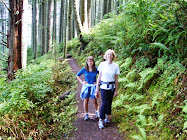
On a recent Sunday I join Anita for 3 hours of silent hiking on Cougar and Squak Mountains. We start by heading uphill at a moderate but still sweat-inducing pace through the second-growth alder and big-leaf maple forest. Not far along we pass an oddly placed, rusting, moss-covered old car. Hmmm.

As we meander through the forest, we pass sword ferns on steroids, towering Devil’s Club with their elephant-ear sized leaves, and happy nettles that reach as high as my head. Higher up we pass groves of gorgeous western red cedar trees—much used and revered by the Northwest Coast Indians for thousand of years and my favorite tree.

For a few hours we walk up and down through the forest, with few stops. The mosquitoes are out in full force and they are a little too happy to see us. As we get toward the top of the mountain, Anita notices “It’s so quiet up here, I don’t hear any birds.” I suggest it’s because we’re above any streams or water.

Hi!”…solo trail runner with a friendly big dog. “How ya doin’?”…middle aged couple. “Hey.”…three teenaged guys in long baggy shorts. (How do they walk so fast with their pants crotch hovering around their knees?)

We pass a few people over the 3 hours we’re out, but compared to more popular trails in the Cascades like Rattlesnake Ledge, Mt. Si, or the trail to the top of Multnomah Falls, this is sparse. And lovely. We get plenty of the silence we were seeking and a lot of verdant green native plant life.

When You Go
Click here for a map of the Cougar-Squak Mountain corridor. Click here for a trail running map of the Issaquah Alps. For directions, click here and scroll down to find directions. From my home in Crown Hill/north Ballard in Seattle, it takes about 30 minutes to get to Issaquah on a weekend day. Beware of the I-90 closure in July 2009 if you're coming from Seattle! Maybe postpone your trip until August or go early on a weekend morning.

Thursday, June 4, 2009

Lambz in the Hood


I’m lying in bed on a Saturday morning, thinking it’s about time to drag myself up for the day. Here in my north Seattle neighborhood, the mostly vintage 1940s and 1950s homes are packed pretty close together, so I hear neighbors’ dogs barking, crows chattering, wind chimes tinkling in the breeze, someone mowing the lawn, voices from down the street.

Baaaaaaaa!

Did I hear what I think I just heard?

Baaaaaa!! Baaaaaaaaa!!! Blecccchhhh!

I scramble to my feet and peer out the window. Of course I just see houses and trees.

After hopping in the shower, I dress and walk down the street to where the sound seems to be coming from. A new fence is up around the side of my neighbor Troy’s small bungalow. And there he is. Bucky the ram.

Of course I didn’t know his name was Bucky at first. But he’s impressive. A big fluffy sheep, with dark horns that curl back to form a tight circle on either side of his head. Sorta like Princess Leia’s hairdo in the first Star Wars movie. Bucky’s standing in the penned-in yard beside Troy’s house looking lonely. (Well, maybe I’m anthropomorphizing.)

Over the next few weeks I get used to Bucky’s cries and bleats blending in with the occasional dog woofs and cat yowls. Then I notice Bucky seems to have developed a multi-toned cry. Walking by Troy’s house one day on the way home from the bus, I notice Bucky has company—Annie and Rose, two fetching, equally fluffy ewes, one white and one dark brown. Diversity!

My next-door neighbor Mike tells me that Troy has property east of the mountains and plans to take the lambs over there after breeding this spring. “At first I thought the other neighbors would be bothered by the sheep cries, but everyone seems to be pitching in and taking over their compostable veggies,” he says.

Within a few months Troy’s herd of lambs has more than doubled. Bucky got some booty and sired four baby lambs--two brown lambs from Rose and two white lambs from Annie. (Or maybe it’s the other way around.)

I go out of my way to walk by the adorable baby lambs. At first they stick close to their moms, and then they stray a bit farther and start cavorting around the pen in cute little leaps. Pretty soon I notice lots of other people stopping by to see the lambs. Parents with small children, hipster twentysomethings, old folks. It’s the Crown Hill scene. I meet neighbors I didn’t know before in front of Troy’s yard. Everybody loves the lambs.

And then I get the sad news. “Troy’s moving all the lambs except Bucky up to Arlington this Saturday to a friend’s place, where they’ll have more room,” Mike tells me. I realize I’ll miss the strangely soothing sound of a bunch of sheep as a neighborhood background noise. Something about their cries made it feel less like a quasi-urban-surburban place around here and more bucolic. It stirs something in me that I can’t quite define. It makes me nostalgic for the farm I didn't grow up on.

So on moving day, my friend Sharia and I join Mike and head over to say goodbye and help Troy. He goes out to the yard, corners and grabs a squirming, heavy Rose and carries her to his pickup truck, where he has a wooden pen set up in the back. “Can you open the gate for me?” he cries. I swing it open so he can pass through quickly and dump Rose in the truck.

Baaa! Baaaaa!! Baaaaaa!!!!!

The little lambs are NOT happy about their moms disappearing. One by one Troy gets the lambs into his truck and nails the pen shut. It’s time for him to leave. I think Troy is slightly bemused that Sharia and I seem so sad to see the lambs go. “These aren’t going to be meat are they?” I ask. Sometimes you shouldn’t ask a question you’d rather not know the answer to. “No,” says Troy.

Whew!


So now Bucky is alone again. He’s pretty quiet. And probably lonely.

And I’ll think twice next time I start to order lamb kebabs.