Monday, June 22, 2009

Along the Cascade Loop: Hiking to Lake Ann

To celebrate the beginning of summer, I’m taking Pacific Northwest Seasons on the road this week and venturing east of the Cascade Crest on part of the Cascade Loop. This scenic drive includes heading east over the North Cascades Highway, angling southeast/south down the Methow Valley and Columbia River to Wenatchee, and looping back to the Puget Sound region over Stevens Pass. My goal is not to sightsee, since I’ve seen it all before, but to stop when I feel like stopping, move when I feel like moving, read when I feel like reading, and to chill on what turns out to be a somewhat chilly trip.

Day 1

I start my 4-day road trip by driving north from Seattle up I-5 to Mt. Vernon, then heading east/southeast over Highway 20 to the Methow. For a dose of exercise and stunning alpine scenery beyond what I can see from the car, I decide to hike to Lake Ann just east of the Cascade Crest. Yes, June is always an iffy time to hike in higher elevations of the Cascades, but we just had a record-breaking stretch of sunny days without rain (28!) so I decide to go for it. Was it doable?

Kinda sorta.

I figure it’s not the best omen when I pass through miles of downpour in the upper Skagit Valley. After a stop at the Cascadian Farms stand for a basket of sweet, organically grown Hood strawberries, which disappear quickly, I forge on past several lower elevation hikes and onward to Rainy Pass (aptly named today) at almost 5,000 feet. As I pull off the highway, I’m stopped by snow in the parking lot just past the trailhead.

“Are you just taking off or finishing your hike?” I ask three backpackers fiddling with their gear next to a parked car. “Finishing. We’ve just come off five days on the trail. Last night was cold!” says one of the guys. They’re friendly and happy, with that healthy several-days-on-the-trail burnished glow. Of course they’re happy—they’re going to have a hot shower tonight.

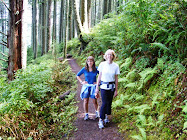
Despite a light rain, I throw on a hat, gloves, and shell over my fleece vest and head up the trail. At first I almost turn back when I have to hopscotch over muddy pools on the trail, but the trail dries out after the first switchback.

After about 30 minutes of hiking upward through mature subalpine forest, I emerge from the trees at a small bowl. As I’m crossing a snow-covered slope where the trail should be, I hear the distinct whistle of a marmot close by. Pheeeeeeeeeeet!! I catch a glimpse of movement on the talus slope below.

Just beyond the bowl, the trail turns narrow as it traverses a steep face. I have to step v-e-r-y carefully over the slick compacted snow on the narrow ledge above a 100-foot cliff. Not so wise to be doing this by myself on a quiet day with very few other hikers out.

After crossing more snow patches in the forest, I finally see the glacial cirque in which Lake Ann lies. At the bottom of a bowl a few hundred feet below the trail, Lake Ann is still mostly snow-covered. On the plus side, it’s too cold for mosquitoes. As I slow my pace to take photos and enjoy the rugged, rocky alpine scenery, the light rain turns to wet snowflakes. Time to head back.

Up this high, dwarf alpine fir trees grow sparsely and delicate little wildflowers crop up furtively in patches of whatever soil forms between the talus. I love this zone and the tenacity of the plants and creatures that inhabit it. I take a deep breathe and fill my lungs with the sweet fresh alpine air.


When I near the small bowl where I heard the whistle on the way up, I spot a two-toned marmot perched on a boulder beside the trail 50 yards ahead. Round and furry, it’s golden with a chocolate brown face and tail. I’m surprised at how big it looks even at this distance. With an upward flick of its tail, the marmot scrambles quickly down the rocky slope and under a rock and starts digging in the dirt with its front paws. Through my binoculars, I see it then dash farther down the slope with a mouth overflowing with roots and disappear. Perhaps for some youngsters?

Farther on and back in the forest below, I spy what I think at first is another marmot on the trail ahead. But instead of darting away at the sound of my voice, it lumbers slowly off the trail and into the brush. Although I can’t see it clearly, I think I’ve spotted a porcupine!

On the last snowfield over the trail, which thankfully is on a mild slope, I’m suddenly on my butt, sliding downhill. I go with it and tumble to a stop, then hop up and back on my way. It could have been a lot worse.

I’m back at the car in just under 2 hours from when I started, which was my goal. Overall I hiked about 3 miles and climbed about 1,000 feet. I broke a sweat, which was another goal. I’m happy. And lucky.

When You Go

The Lake Ann trailhead is just off Highway 20 at Rainy Pass, which is at milepost 157. Come August on a weekend day, this trail will be pretty busy. Sneak there on a week day if you can, but wait until late July or August for the trail and lake to clear. As the locals in the Methow Valley say, get a lot of bang for your buck and continue up to the ridge past Lake Ann to Maple Pass for spectacular views of the North Cascades. A Northwest Forest Pass is required for parking at the trailhead. Click here to buy one online for $30.

Wednesday, June 17, 2009

Issaquah Alps: Meandering through the Rainforest


For you hard core hikers who think a hike isn’t a hike without crossing a glacier or a steep talus slope, think again next time you zip past the foothills on your way to higher elevations.

With gas prices shooting up again, I often don’t go all the way into the Cascades for a day hike anymore. The last 2 years I head almost as much to the Issaquah Alps (about 20 miles east of Seattle) for a workout on the trails. Hike through a lush temperate rainforest to get a taste of the forests that used to mantle most of the Puget Sound region.
On a recent Sunday I join Anita for 3 hours of silent hiking on Cougar and Squak Mountains. We start by heading uphill at a moderate but still sweat-inducing pace through the second-growth alder and big-leaf maple forest. Not far along we pass an oddly placed, rusting, moss-covered old car. Hmmm.

As we meander through the forest, we pass sword ferns on steroids, towering Devil’s Club with their elephant-ear sized leaves, and happy nettles that reach as high as my head. Higher up we pass groves of gorgeous western red cedar trees—much used and revered by the Northwest Coast Indians for thousand of years and my favorite tree.

For a few hours we walk up and down through the forest, with few stops. The mosquitoes are out in full force and they are a little too happy to see us. As we get toward the top of the mountain, Anita notices “It’s so quiet up here, I don’t hear any birds.” I suggest it’s because we’re above any streams or water.

Hi!”…solo trail runner with a friendly big dog. “How ya doin’?”…middle aged couple. “Hey.”…three teenaged guys in long baggy shorts. (How do they walk so fast with their pants crotch hovering around their knees?)

We pass a few people over the 3 hours we’re out, but compared to more popular trails in the Cascades like Rattlesnake Ledge, Mt. Si, or the trail to the top of Multnomah Falls, this is sparse. And lovely. We get plenty of the silence we were seeking and a lot of verdant green native plant life.

When You Go
Click here for a map of the Cougar-Squak Mountain corridor. Click here for a trail running map of the Issaquah Alps. For directions, click here and scroll down to find directions. From my home in Crown Hill/north Ballard in Seattle, it takes about 30 minutes to get to Issaquah on a weekend day. Beware of the I-90 closure in July 2009 if you're coming from Seattle! Maybe postpone your trip until August or go early on a weekend morning.

Thursday, June 4, 2009

Lambz in the Hood


I’m lying in bed on a Saturday morning, thinking it’s about time to drag myself up for the day. Here in my north Seattle neighborhood, the mostly vintage 1940s and 1950s homes are packed pretty close together, so I hear neighbors’ dogs barking, crows chattering, wind chimes tinkling in the breeze, someone mowing the lawn, voices from down the street.

Baaaaaaaa!

Did I hear what I think I just heard?

Baaaaaa!! Baaaaaaaaa!!! Blecccchhhh!

I scramble to my feet and peer out the window. Of course I just see houses and trees.

After hopping in the shower, I dress and walk down the street to where the sound seems to be coming from. A new fence is up around the side of my neighbor Troy’s small bungalow. And there he is. Bucky the ram.

Of course I didn’t know his name was Bucky at first. But he’s impressive. A big fluffy sheep, with dark horns that curl back to form a tight circle on either side of his head. Sorta like Princess Leia’s hairdo in the first Star Wars movie. Bucky’s standing in the penned-in yard beside Troy’s house looking lonely. (Well, maybe I’m anthropomorphizing.)

Over the next few weeks I get used to Bucky’s cries and bleats blending in with the occasional dog woofs and cat yowls. Then I notice Bucky seems to have developed a multi-toned cry. Walking by Troy’s house one day on the way home from the bus, I notice Bucky has company—Annie and Rose, two fetching, equally fluffy ewes, one white and one dark brown. Diversity!

My next-door neighbor Mike tells me that Troy has property east of the mountains and plans to take the lambs over there after breeding this spring. “At first I thought the other neighbors would be bothered by the sheep cries, but everyone seems to be pitching in and taking over their compostable veggies,” he says.

Within a few months Troy’s herd of lambs has more than doubled. Bucky got some booty and sired four baby lambs--two brown lambs from Rose and two white lambs from Annie. (Or maybe it’s the other way around.)

I go out of my way to walk by the adorable baby lambs. At first they stick close to their moms, and then they stray a bit farther and start cavorting around the pen in cute little leaps. Pretty soon I notice lots of other people stopping by to see the lambs. Parents with small children, hipster twentysomethings, old folks. It’s the Crown Hill scene. I meet neighbors I didn’t know before in front of Troy’s yard. Everybody loves the lambs.

And then I get the sad news. “Troy’s moving all the lambs except Bucky up to Arlington this Saturday to a friend’s place, where they’ll have more room,” Mike tells me. I realize I’ll miss the strangely soothing sound of a bunch of sheep as a neighborhood background noise. Something about their cries made it feel less like a quasi-urban-surburban place around here and more bucolic. It stirs something in me that I can’t quite define. It makes me nostalgic for the farm I didn't grow up on.

So on moving day, my friend Sharia and I join Mike and head over to say goodbye and help Troy. He goes out to the yard, corners and grabs a squirming, heavy Rose and carries her to his pickup truck, where he has a wooden pen set up in the back. “Can you open the gate for me?” he cries. I swing it open so he can pass through quickly and dump Rose in the truck.

Baaa! Baaaaa!! Baaaaaa!!!!!

The little lambs are NOT happy about their moms disappearing. One by one Troy gets the lambs into his truck and nails the pen shut. It’s time for him to leave. I think Troy is slightly bemused that Sharia and I seem so sad to see the lambs go. “These aren’t going to be meat are they?” I ask. Sometimes you shouldn’t ask a question you’d rather not know the answer to. “No,” says Troy.

Whew!


So now Bucky is alone again. He’s pretty quiet. And probably lonely.

And I’ll think twice next time I start to order lamb kebabs.

Monday, May 25, 2009

North Cascades Institute Weekend Getaway: Don’t Forget to Relax!

After several months working toward a big project deadline, I’m in dire need of some downtime in a beautiful setting. Give me craggy, towering mountain peaks, expanses of water, or lush green forests and I’m happy. Give me all three together and I’m very happy. So I check out the schedule for my favorite Northwest place that combines them all—the North Cascades Institute (NCI) Environmental Learning Center on Diablo Lake, a 2+-hour drive northeast of Seattle.

Just a week after my deadline, NCI is offering a Diablo Downtime weekend of yoga, slow food, canoeing, hiking, and relaxing. I sign up immediately.

This LEED-certified “green” compound sits on the edge of verdant forest in the North Cascades National Park complex, sandwiched between the steep south face of Sourdough Mountain and the lake. Snow-covered Pyramid Peak, looking a bit like the Matterhorn, juts skyward across the lake from the center.

Getting There
My friend Rich and I are blessed with a gorgeous spring day as we head north and east from Seattle into the North Cascades. After winding through the narrow, rocky Skagit River canyon above Newhalem, we turn off Highway 20 to get to the center. We drive across the vintage 1920s Diablo Dam and along the lakeshore, arriving before dinner on Friday afternoon. We’ll stay through lunch on Sunday.

Getting Oriented
Tires crunch on the gravel entry road as we drive up and park in front of the main office to unload our bags before looping back down to the parking lot. To mirror the surrounding forest, the walkway between the Environmental Learning Center’s main office, library, and classroom buildings was designed to represent a forest canopy. The tall, thick concrete columns are the tree trunks, and the upper support bars are the branches.

Our group of 16 from around the region gathers on benches outside the Wild Ginger library building. “Welcome! Take a minute to learn three things about someone you don’t know sitting near you,” says one of the fresh-scrubbed graduate student interns hosting us this weekend. It’s a great ice breaker and good way to get the weekend off to a friendly start. I learn that several other guests live near me in Seattle’s Ballard neighborhood.

A Bit of History
Back in 1986, some former North Cascades National Park climbing rangers started NCI, offering weekend courses for adults with an emphasis on the region’s natural and cultural history. “We thought it would be a good gig for a few years,” laughs Executive Director and co-founder Saul Weisberg, “…sort of like summer camp for adults.” This is exactly what I hear several people call the Diablo Downtime weekend.

Within a few years NCI added courses for kids. “We’re teaching kids to care about nature and the environment,” says Saul. The adult weekend programs help fund the mountain school for kids during the week each spring and fall. Saul mentions proudly that one boy who attended NCI’s mountain school years ago is now a teacher specializing in environmental education for kids, completing the circle.

NCI got a boost when the Environmental Learning Center opened in 2005, funded in large part by Seattle City Light as a condition of their permit to continue operating dams on the upper Skagit River. Now this beautiful facility allows more people to come and participate in a variety of courses and getaways. I enjoy coming here so much that this is my third weekend visit.

Savoring Slow Food
After we get settled into our spartan but comfortable dorm room, we head to dinner in the light and airy dining hall. On the deck overlooking Diablo Lake, we start with fresh grilled seasonal vegetables, local cheeses, and artisan bread. Chef Charles Claassen, a lean, smallish man, introduces himself and talks briefly about his kitchen’s emphasis on working with local Skagit Valley food producers. As usual, the food is healthful and wonderful—tonight we dine on wild salmon with pesto, a wonderful greens salad, wild rice, and several veggie sides.

Scrambling for Downtime
Our agenda for the weekend includes a choice of several activities—yoga classes, hikes with naturalists, canoeing on the lake, mushroom foraging with Chef Charles and then a discussion on slow food…or just lounging. My only complaint is there are so many cool things to do that I want to do it all and don’t really allow myself much downtime.

So I do a lot—Saturday morning Rich and I kayak on mirror-smooth Diablo Lake up the old Skagit River canyon and back. (We brought our kayaks, although NCI provides canoes.) After scarfing down my lunch, I head out with Chef Charles and five other women to go hunt for morel and oyster mushrooms. We get back just in time to change and dash to yoga class, where I contort my body into what are supposed to be restorative postures. Then I have a few minutes to shower and change for dinner—another fabulous feast featuring some wild greens we foraged this afternoon. Whew!

Ring around the Campfire
Saturday night we gather around a campfire at the edge of the forest while the dusky evening dwindles into twilight. The grad students read a brief history of time they’ve crafted about the geologic and cultural origins of the site on which we sit, starting millions of years ago when the land was the ancient supercontinent Rodinia, then Pangaea, before the North Cascades mountains were formed. Adam, a handsome twentysomething NCI staffer, brings it to a close with a stellar Conan O'Brien impersonation.

“So what brought you all here?” asks Adam. Laura, who left her husband and kids at home and came with a couple girlfriends, speaks up first. “I have kids and think it’s important that they experience nature and mountains beyond the suburbs where we live. But it’s also important that I do, too.”

“As a girl I was fascinated by the history and lore of these mountains and the old mining stories,” I pitch in, "And I like being on the edge of this roadless, protected wilderness where grizzlies roam." Soon it's dark, and I head back to the room. Despite my intention to make progress in the current book I’m reading, I quickly fall into a sound sleep breathing the clean mountain air.

Morning Wind-down
After a tasty breakfast of French toast with strawberries, I opt for a birding hike with three NCI naturalists. As we move slowly along the trail, we hear lots of birds but don’t see many in the dense green understory beneath the forest canopy. I do manage to spot a big pileated woodpecker high up a tree, and almost step on a gray-green alligator lizard skittering across the trail. The deer we pass seem blasé about us humans as they munch away on a salad of fresh vine maple leaves.

Too soon our time in this beautiful place draws to a close. Some people leave after breakfast, but we roll out after lunch to head home. I met some nice and interesting people, learned more about the North Cascades, and went home refreshed but tired. I’ll be back, but next time I’m not going to try and do it all.

When You Go
NCI has a full season of courses and sponsors occasional events in Seattle and Bellingham. Check out their website for a full list of events. They’re offering discounts on upcoming weekends. We paid $325 each, which included six excellent meals, two nights lodging, and yoga classes, hikes and canoe trips with naturalists, and an afternoon with the chef. First-timers get a $30 discount.

Friday, May 1, 2009

Happy May!


When I was a little girl, May Day used to be about leaving bouquets of spring flowers on my neighbor's doorstep, ringing the doorbell, and running away before they opened. So I'm leaving you a burst of spring from a pot on my back patio, running away, but promising I'll be back in a couple days with a new post about more everyday Northwest adventures--this time about lovely Lopez Island. A big deadline has kept me away, but I'll be out and about more again soon. Happy May Day!

Saturday, April 11, 2009

Spring Skiing in the Northwest: Get out there!


By now most people have hung up their skis or boards for the season. But not everyone. Lift lines are mostly nonexistent, there’s still tons of snow in the Cascades, and often (well, sometimes) the sun is shining.

Throw those skis on top of your rig, stuff your pack with sunscreen and a light parka, and be sure to bring your rain gear just in case. Then head on up to the mountains.

With the big dump of snow that fell in the central Cascades last week, plan to be surprised at the lingering snow banks on the side of the road. Last weekend I headed up to Snocrummie (Snoqualmie) due east of Seattle, while my friends Andy and Mark went to Crystal Mountain about 90 miles southeast of Seattle. My friend Matt headed up to Mt. Hood southeast of Portland. My friend Greg was up at Mt. Baker. And Alex went to Whistler in B.C. north of Vancouver. Lots of choices, at least through April.

With longer days and mostly warmer temps, spring skiing is a little more chill than chilly midwinter. The days get warmer instead of colder as the afternoon draws to a close. Or just ski the morning and get home in time for an afternoon barbeque or gardening. But on those sunny, warm days, relax on the deck outside the lodge and maybe grab a hamburger off the outdoor grill.

Morning can start off cold and you need your full winter parka, hat, and gloves. Last weekend at Snoqualmie I was bundled up and chilled on my first lift ride up. The snow was fresh and soft. By noon I’d shed the parka and hat and did a face plant when I came fast out of shady grove and got stopped by some sticky, slushy snow. Call it Cascade concrete, peanut butter, or overcooked corn.

Sometimes you hit it just right and have one of those epic days. Years ago a friend and I were skiing up at Blackcomb the first weekend in June when most everyone else had long since moved on to their sailboats or tennis courts. For several days prior, it snowed a couple feet in an unusual late spring storm. When we got to the top of the mountain, we had the place almost to ourselves. And then the lower mountain lift malfunctioned for a while and no one else was coming up. Can you say skier’s nirvana? All that untracked fresh snow, most of the other skiers down below. Matt and I sliced our figure 8 signatures all over Seventh Heaven. I still smile when I think about it.

Then there was the time Claudia and I cut classes at UW and skied in shorts and bikini tops up at Alpental on a warm early May day. A little risky, but we were only 19. You’re only a teenager once, right? Enjoy all that late season snow—it’ll be months again before the snow flies.

When You Go
Check out the links to all the ski areas I listed above, plus Mount Bachelor here. Bring strong sunscreen with zinc oxide. Have fun.

Monday, March 30, 2009

Big John’s PFI: Seattle’s Not-So-Secret Food Find


Here at Pacific Northwest Seasons, I’ve written avidly about why we should eat local food, fresh with the season (see my Eating with the Seasons post). After all, our farmers’ markets feature fresh and beautiful local food year-round.

So allow me to contradict myself.

Ever since I discovered PFI’s (Pacific Food Imports) retail store in an old brick warehouse just south of downtown Seattle in the late 1980s, I can’t get enough of this place. Every few months I head to this cornucopia of mostly imported foods to stock up on olive oil from Italy or Spain, Colombian estate chocolate, Spanish aged sherry vinegar, hand-harvested fleur de sel de Guérande from France, Italian pastas of all shapes and sizes, sharp Vermont white cheddar cheese, crispy butter cookies from Holland, and much more.

You can get much of this stuff at some of the higher end grocery store chains like Whole Foods and Metropolitan Market, or at DeLaurenti’s in Pike Place Market. But you’ll pay more (except perhaps at Trader Joe’s). And you’ll miss out on the treasure-hunt feeling you get while wandering around the aisles and nooks in this anti-chain store, discovering exotic and fascinating products.

Finding your way to PFI can be a challenge since it’s not right on the street and the sign is easy to miss. When you do arrive, look for the red-white-green awning (think Italian flag) over the entrance at the bottom level of an unassuming, two-story brick building. This is not your usual shopping area—it’s an old Seattle industrial district sandwiched between railroad tracks and I-5 to the east. Walk up the stairs, pass through the short entryway lined with framed black and white photos, and enter a foodie’s fantasyland.

What you’ll notice first are the colorful shelves and aisles stuffed with jars, bottles, and packages of all shapes and sizes. Or maybe your eyes will land on the long, lit display case to your right full of big wedges and chunks of foreign and domestic cheeses. Grab a cart or a big white bucket to collect your stash and walk around over the uneven cement floors. Maybe today English won’t be the language spoken by most of your fellow customers.

Give yourself some time to explore before grabbing things off the shelves. Need some hard-to-find slabs of Syrian dried apricot paste? No problem! Small burlap bags of artisan sea salt from Bali? Got it. Vivid orange-red jars of chile pepper-eggplant ajvar puree from Bulgaria? Just down the aisle. South African red chile sauce? Tucked between the jars of Indian ghee and Moroccan preserved lemons. I have no idea how to use many of these items, but they offer exciting possibilities.

On a recent visit to PFI, I find myself in the checkout line behind a man with an overflowing grocery cart. “Planning a party?” I ask him. “No.” he replies. “I run a restaurant up in Mount Vernon. I come down here every month to stock up on items I can’t get anywhere else.” For you non-locals, Mount Vernon is about 60 miles north of Seattle. A bit of a trek for groceries

My friend Julie, one of the most innovative and capable cooks I know, shows up behind me in line with a bucket of goodies. “What did you get?” I ask. She pulls out a dark green, slender bottle of avocado oil first. “This is expensive, but it’s a lovely bright green and a perfect garnish to drizzle on pizza or finish dishes.” She also has several cartons of chopped plum tomatoes from Italy that come in handy for her sauces. She wants some good parmesano-reggiano but is daunted by the one pound minimum on cheeses. I ask Louise, a longtime employee behind the counter, if they have any smaller chunks tucked somewhere. “Yea, we have about a two-third pound piece,” she says. Julie and I split it.

Sometimes my favorite products disappear from the shelves. I’ve learned over the years to be patient—sometimes they just as suddenly reappear. My favorite Italian olive
oil, a certified-organic, buttery oil from the Ionian Coast, vanished from the shelves for about 5 years until I just found it there again a few months ago.

This family-run business has been operating for over 40 years. I’ve never seen Big John, who is in his eighties now, but the second-generation is running the business now. Let’s hope the next generation keeps it going at least another 40 years.

When You Go
You won’t find any advertisements for PFI. They get plenty of regular customers via word-of-mouth. Click here for directions. It’s on Sixth Avenue South due east of Qwest Field, Seattle’s NFL football stadium, and just north and east of Safeco Field where the Mariners play. Time your trip carefully. Avoid going right before or after a Seahawks or Mariner’s game or you’ll learn how truly awful Seattle traffic can be. PFI’s hours are somewhat limited: they’re not open evenings, only open until about 3 pm on Saturdays, and closed Sundays.

Tuesday, March 17, 2009

Carkeek Park’s Snowdrops: Signs of Spring


Last weekend while walking along the Piper’s Creek Trail, I happened to glance left as I crossed the small bridge just north of the orchard. Voila! Strewn among the brown, downed leaves from last fall were masses of slender green shoots and sweet, lily-like flowers.

They’re late, but the snowdrops in north Seattle’s Carkeek Park are in full bloom this week. [February 2014 update, the snowdrops are in full bloom as of February 13 this year!] But hurry, they’ve peaked and likely won’t be so abundant and vivid by next week. With our numerous snowfalls and cold snaps this past winter, the snowdrops (Galanthus nivalus) that usually come up in February are a March treat this year.

This “secret garden” of hundreds, perhaps thousands of delicate little white flowers grows just north of the old orchard above Piper’s Creek. These are remnant bulbs that were probably planted when the site was an old farmstead over 100 years ago (although I’m not sure bulbs survive that long). Since then, the plants have multiplied and spread into several patches growing along and above the small stream that flows into Piper’s Creek next to Piper’s Orchard.


Tread carefully if you decide to get a closer look. Park naturalists want you to stay on the main trails to prevent erosion. Welcome to spring!

When You Go
Click here for a map of Carkeek Park.To get to Carkeek from I-5,
get off on Northgate Way (Exit 173) and head west. Northgate Way becomes NW 105th Street and crosses Aurora Boulevard (SR 99). Turn right on Greenwood Avenue N to NW 110th Street and turn left. Continue about six blocks,the street becomes NW Carkeek Park Road and descends to the main park entrance. Park on the left at the bottom of the hill, before the road splits. Head up (away from Puget Sound) past the water treatment plant and look for the snowdrops on the left just before you get to the orchard.